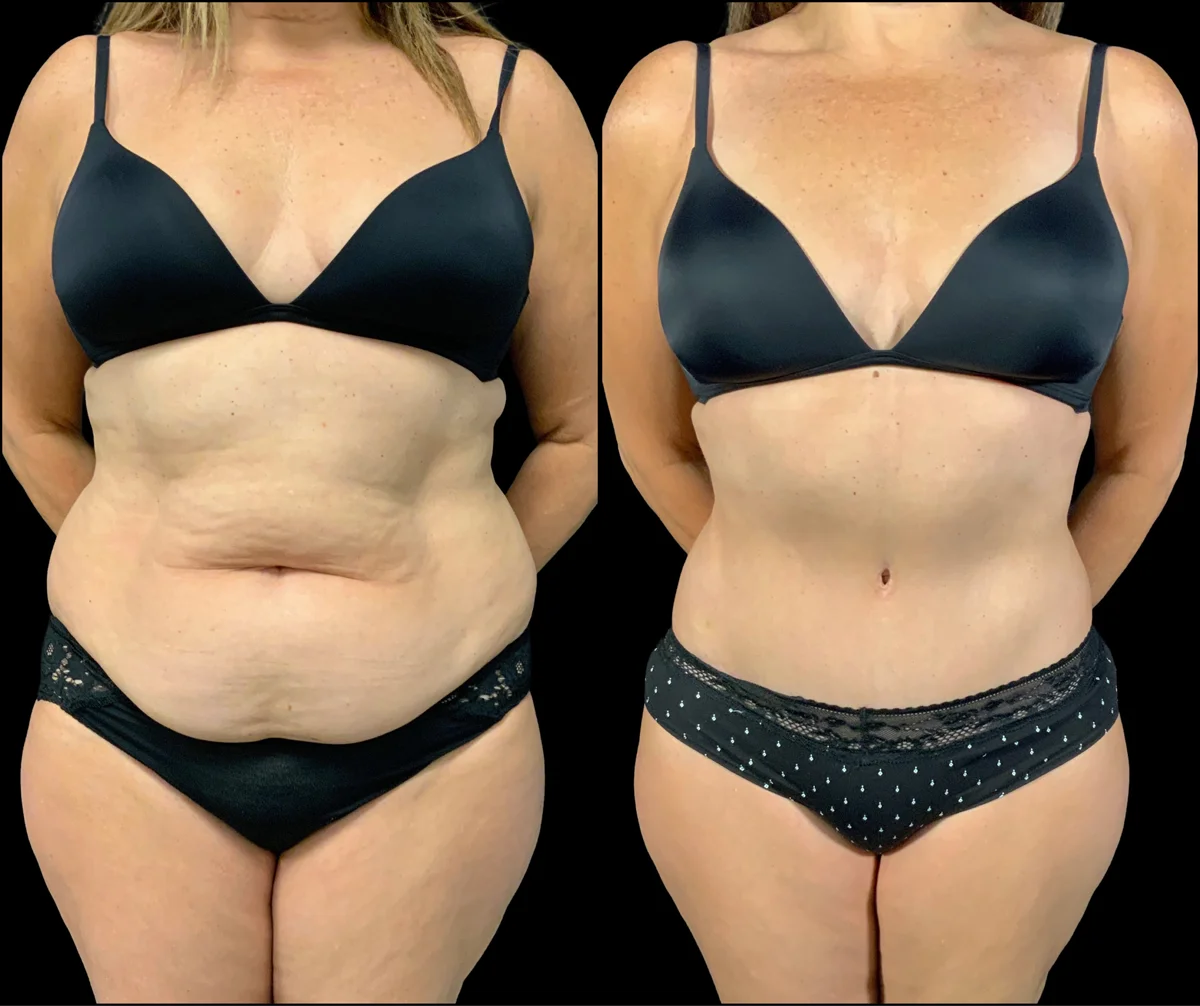
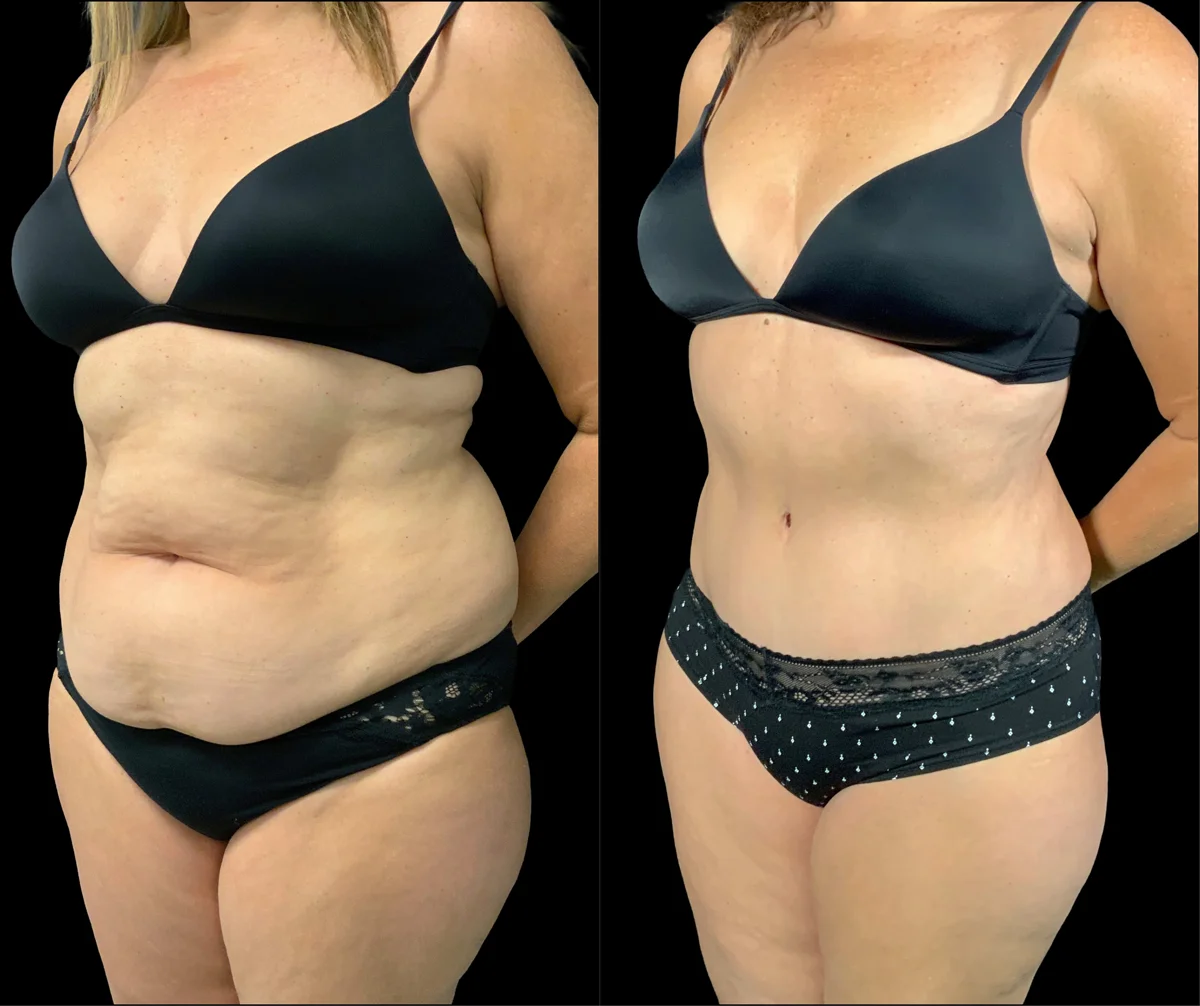
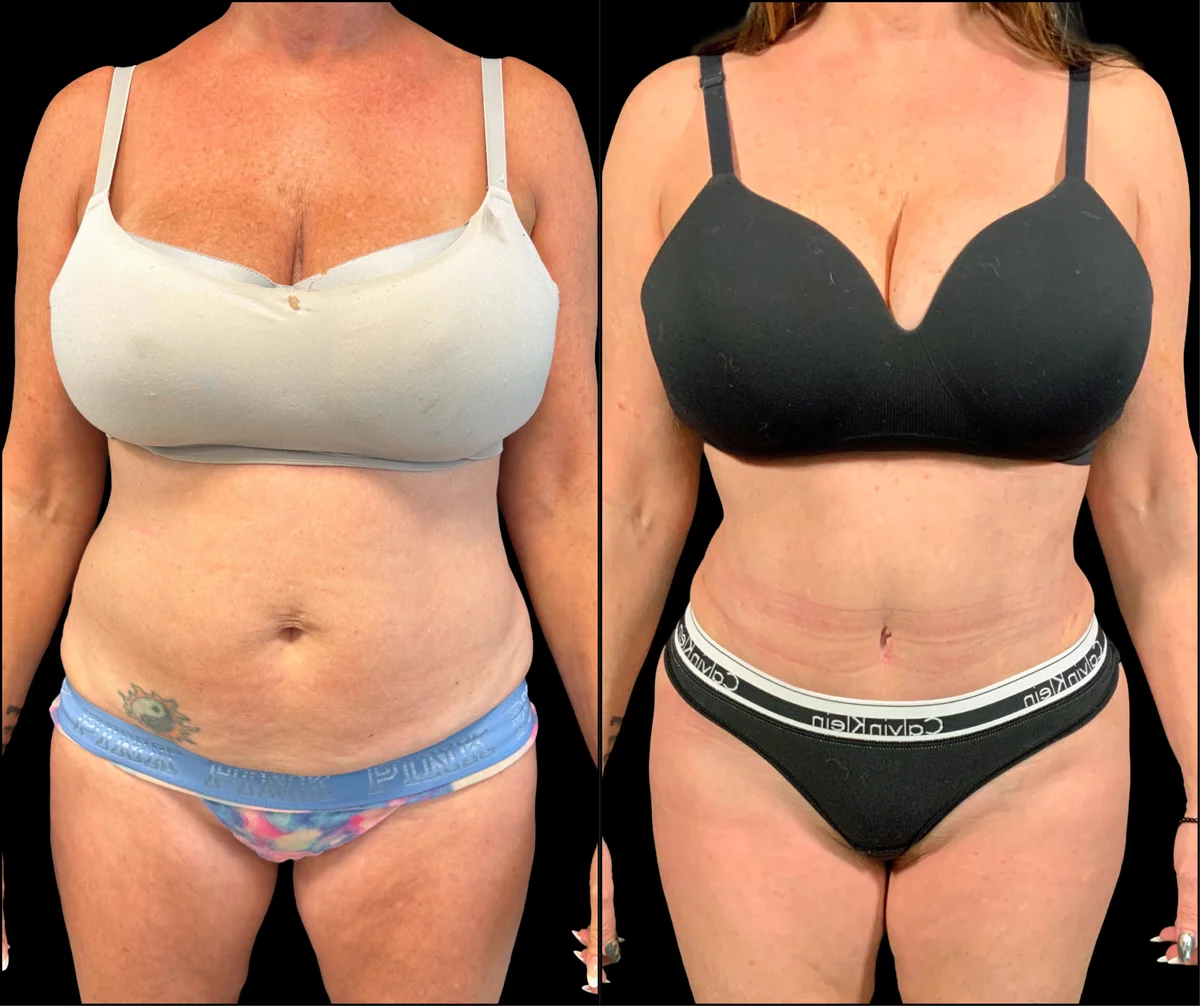
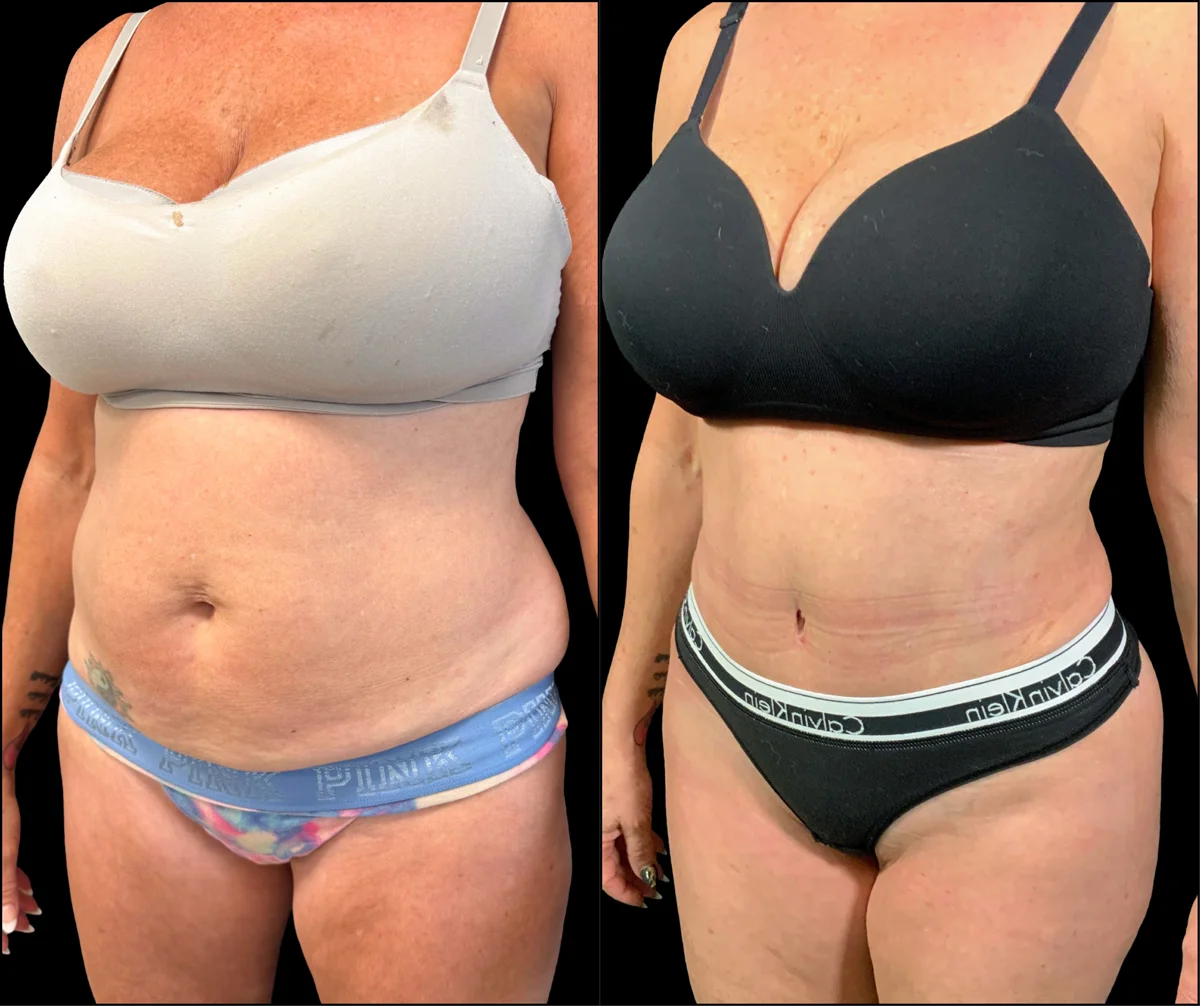
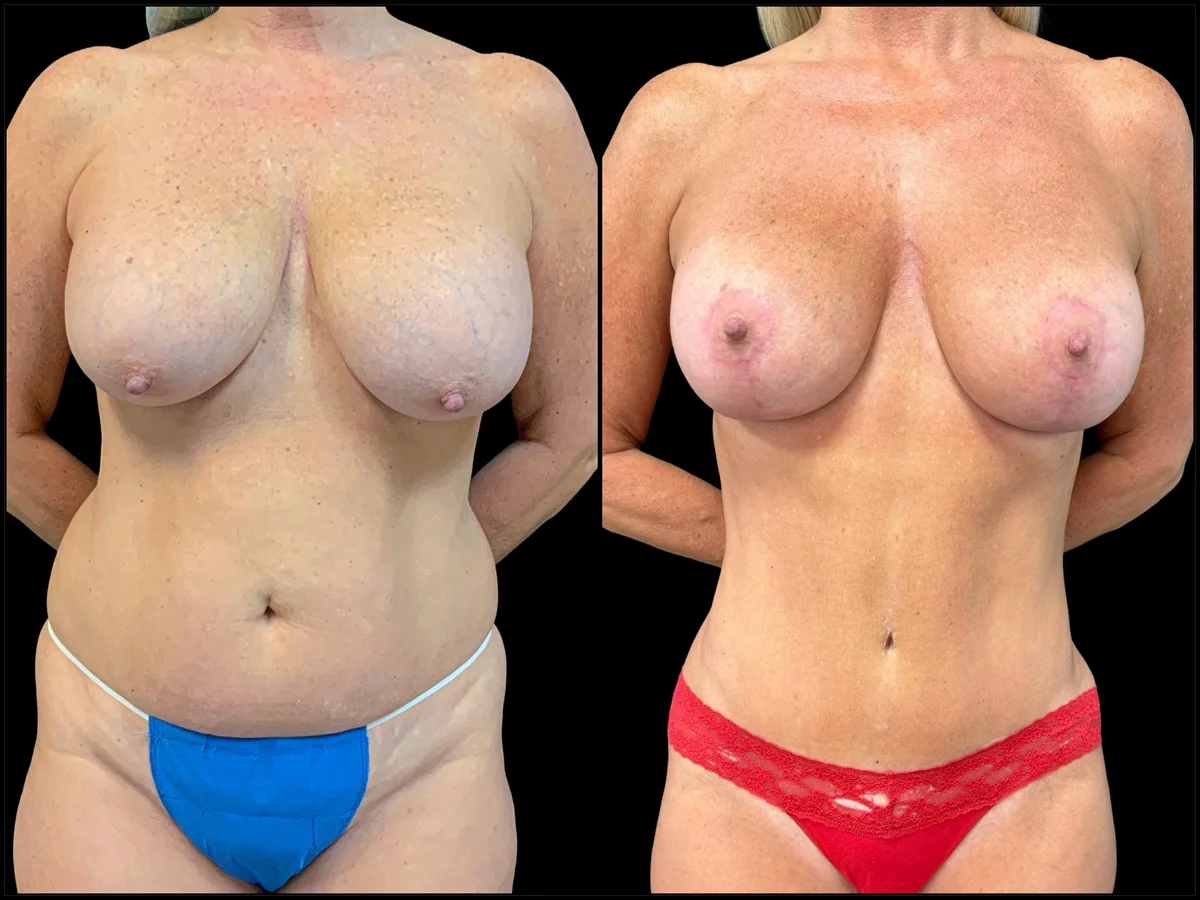
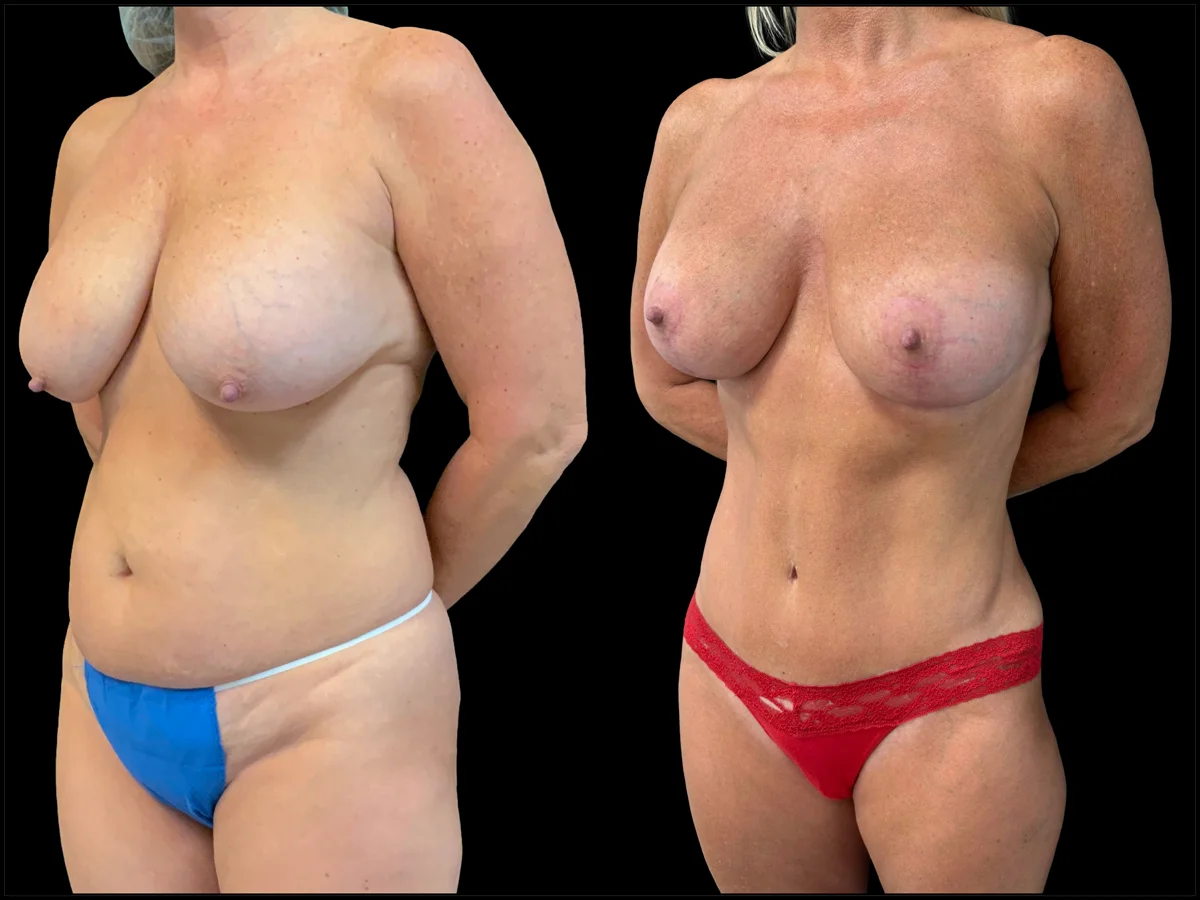
For many patients, the biggest hesitation about a tummy tuck is the scar.
They may understand that a tummy tuck can remove loose skin, repair muscle separation, improve the belly button, and create a flatter abdomen. But they still worry about the incision. They often ask, “How short can the scar be?” or “Can I avoid a hip-to-hip incision?”
Those are fair questions. But my answer is always rooted in anatomy.
The goal is not to make the shortest scar possible. The goal is to make the correct scar, place it as low as possible, and use it to create the best abdominal contour.
Scarring has a stigma. Most patients would prefer to avoid scars altogether, and that is completely understandable.
But in tummy tuck surgery, the scar is the tradeoff that allows us to remove excess skin. Without an incision, the extra skin cannot be removed. Liposuction can remove fat through small access points, but it cannot remove a lower abdominal fold, tighten loose skin, repair muscle separation, or reshape the belly button.
This is the central distinction between liposuction and tummy tuck surgery.
Liposuction is a fat-removal and contouring procedure. A tummy tuck is a skin, muscle, fat, and contour operation. When a patient’s concern includes loose skin, especially after pregnancy or weight fluctuation, the scar is what allows us to solve the problem directly.
One misconception I address almost daily is that the incision length is something the surgeon simply chooses.
In reality, incision length is dictated by the amount and distribution of extra skin.
If the excess skin is limited to the front of the lower abdomen, the incision may not need to extend as far. If the loose skin extends from hip to hip, then the incision typically needs to address that full span. If the skin excess continues beyond the hip and into the flank, an extended tummy tuck may be the better operation.
This is not about making the scar longer for no reason. It is about avoiding leftover skin.
If the incision is too short for the amount of skin excess, the surgeon may tighten the front but leave extra tissue at the sides. Over time, that can create bunching or a dog-ear deformity. Patients may end up with a flatter abdomen in the front but fullness or overhang at the ends of the incision.
That is exactly what we are trying to avoid.
One of the ways I show this to patients is by having them sit at the edge of the exam table, bent at about 90 degrees. In that position, we can see where the lower abdominal skin folds and where that fold ends.
If the fold ends on the anterior abdomen, then the incision can usually be planned to address that area. If the fold travels beyond the hip toward the flank, I show that to the patient directly. That tells us the skin excess is not just in the front.
This is a very helpful moment in consultation because the patient can see why a longer incision may be in their best interest. It is not an arbitrary decision. It is the anatomy showing us what needs to be corrected.
Many patients naturally think a shorter scar is better. But a shorter scar is only better if it still allows us to remove the skin that needs to be removed.
A short incision that leaves behind excess skin is not a better aesthetic result. It may create the very contour problem the patient was hoping to avoid.
That is why I would rather plan an incision that is slightly longer, low, and well-hidden than create a shorter incision that compromises the contour. The scar should be designed to serve the shape.
The best tummy tuck scar is not just short. It is low, strategic, purposeful, and matched to the patient’s anatomy.
While incision length depends on skin excess, scar position is something I pay close attention to.
My goal is always to place the scar as low as possible so it can be hidden easily in underwear, swimwear, and clothing. A scar that is longer but low and well-positioned is often much easier for patients to live with than a shorter scar that sits too high or creates contour irregularities.
This is especially meaningful for patients who have had C-sections. Many already understand what it means to have a lower abdominal scar. In many cases, the old C-section scar can be removed during the tummy tuck and replaced with a lower, cleaner, more aesthetically planned incision.
For these patients, the tummy tuck scar is not always an entirely new concept. It can be a revision and improvement of the scar they already have.
It is also important to keep the scar in perspective.
A tummy tuck can address changes that liposuction alone cannot: loose skin, muscle separation, belly-button changes, lower abdominal overhang, and previous scarring. For the right patient, the improvement in shape can be profound.
That does not mean the scar should be minimized or ignored. It should be discussed honestly. But it should be weighed against what the operation can accomplish.
Many patients are willing to accept a low, hidden scar if it means removing skin they could not exercise away, flattening a protruding abdomen from muscle separation, and improving the overall contour of the trunk.
Liposuction has a very important role, but it is not a substitute for skin removal.
If a patient has good skin quality, minimal stretch marks, no true skin excess, and a focal area of stubborn fat, liposuction alone may be a fantastic option. In that patient, the skin can redrape predictably after fat removal.
But if the skin is already loose, stretched, or excessive, liposuction may not tighten it enough. In some patients, removing the fat can even make the loose skin more apparent.
That is why I am careful not to promise a tummy tuck result from a liposuction procedure. They are different operations with different indications.
When I plan a tummy tuck, I am not thinking only about removing skin or flattening the abdomen. I am thinking about the entire silhouette.
My goal is to restore a feminine shape, with a natural waist-to-hip transition and a balanced contour from the upper body to the lower body. A flat abdomen is important, but flat alone is not always beautiful. If the waist and flanks are not shaped, the abdomen can look boxy.
That is why I often combine tummy tuck surgery with liposuction. The tummy tuck removes skin and repairs the abdominal wall. Liposuction helps sculpt the surrounding contour, refine the waist, and improve the overall harmony of the trunk.
The scar allows the skin correction. The liposuction helps refine the silhouette. Together, in the right patient, they create a more complete transformation.
A tummy tuck scar should not be feared blindly, and it should not be planned casually.
The incision should be as short as the anatomy allows, as long as the correction requires, and as low as possible for concealment. The goal is not to win the contest for the smallest scar. The goal is to create the best abdominal shape while placing the scar in the most thoughtful and hidden position possible.
For patients with loose skin, muscle separation, belly-button changes, or a C-section overhang, the scar is what allows the surgeon to directly correct the problem. Liposuction alone cannot do that.
The right procedure is the one that matches the anatomy. And when the anatomy calls for a tummy tuck, a well-planned scar is not a failure of the operation. It is part of what makes the transformation possible.