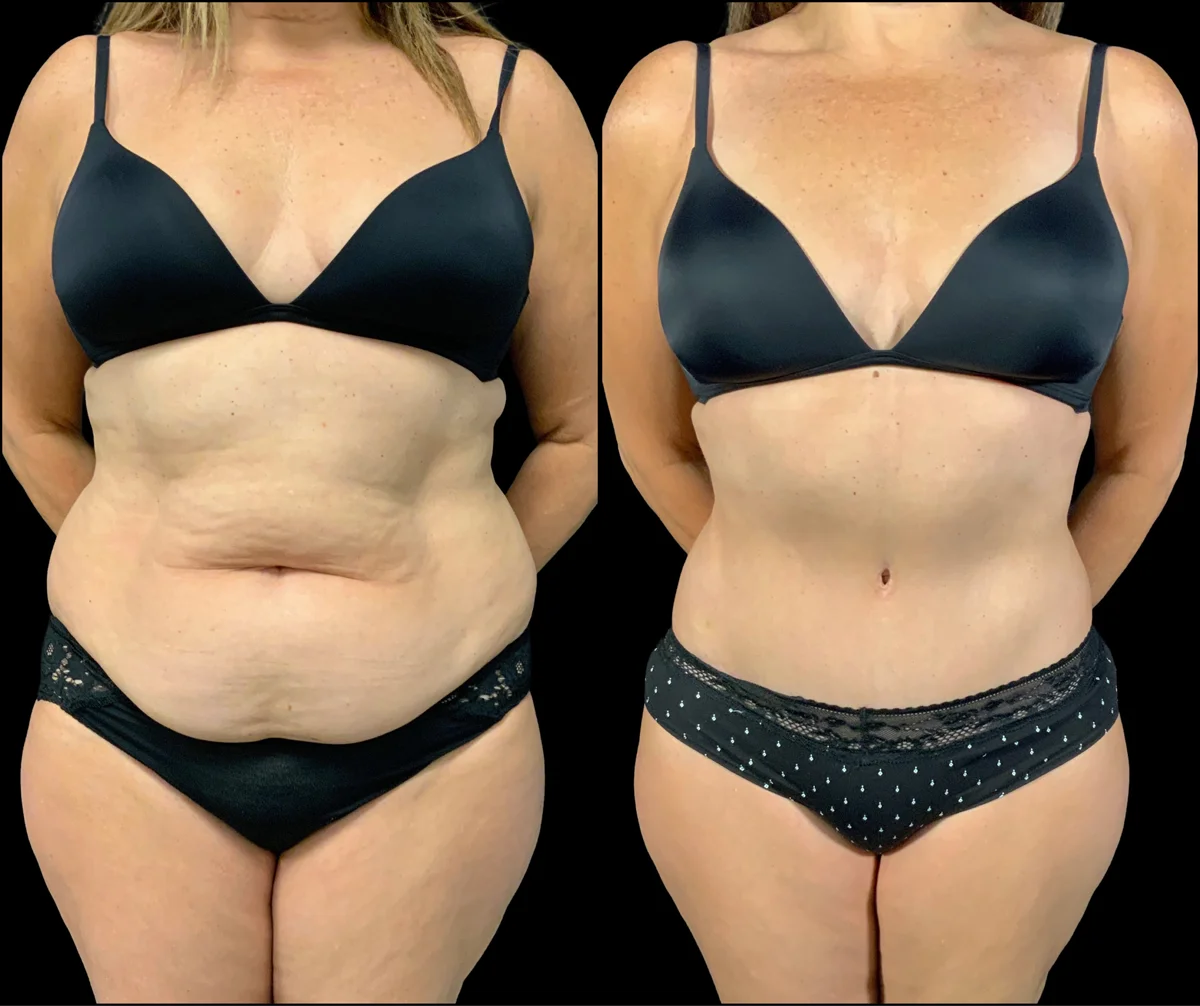
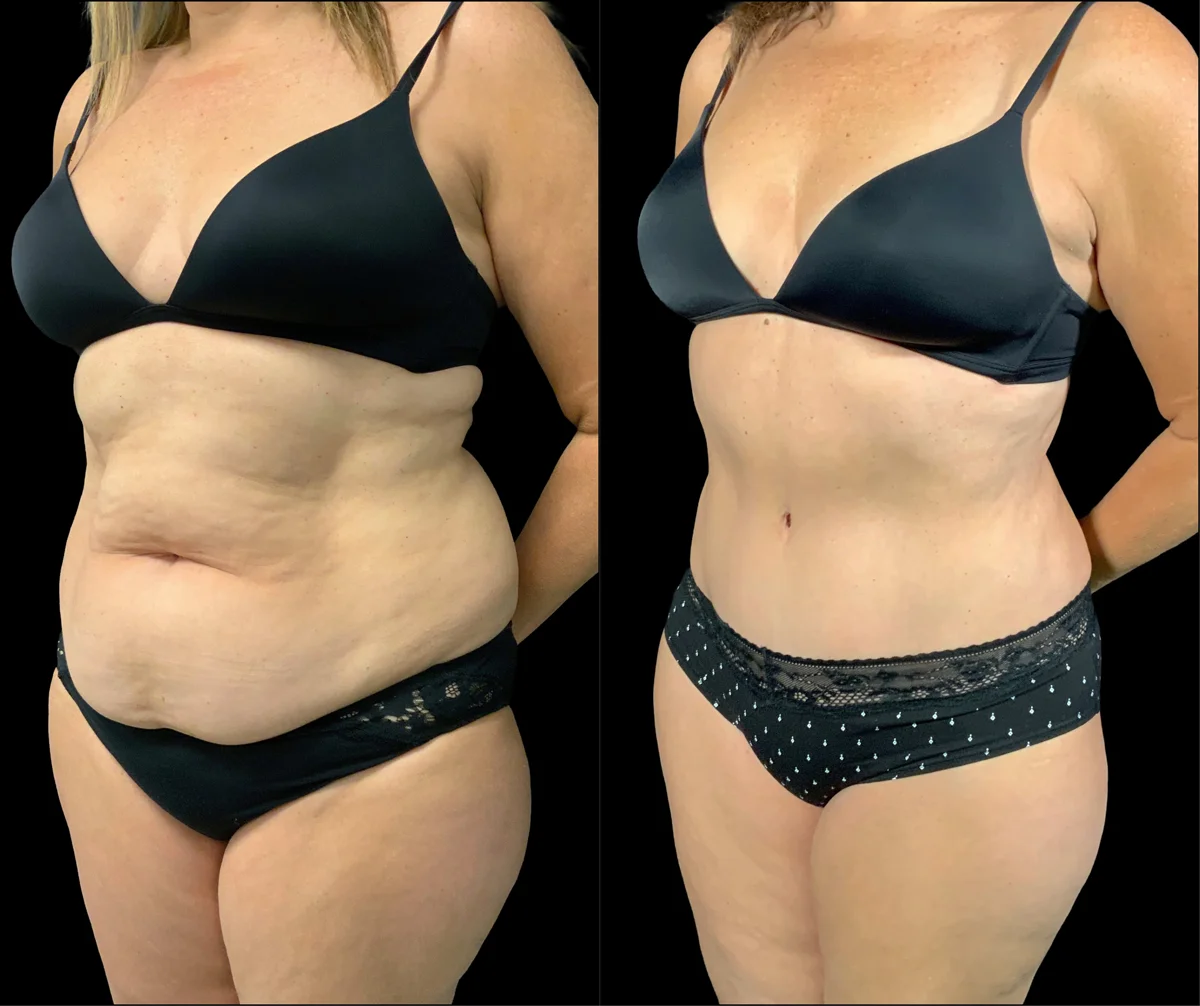
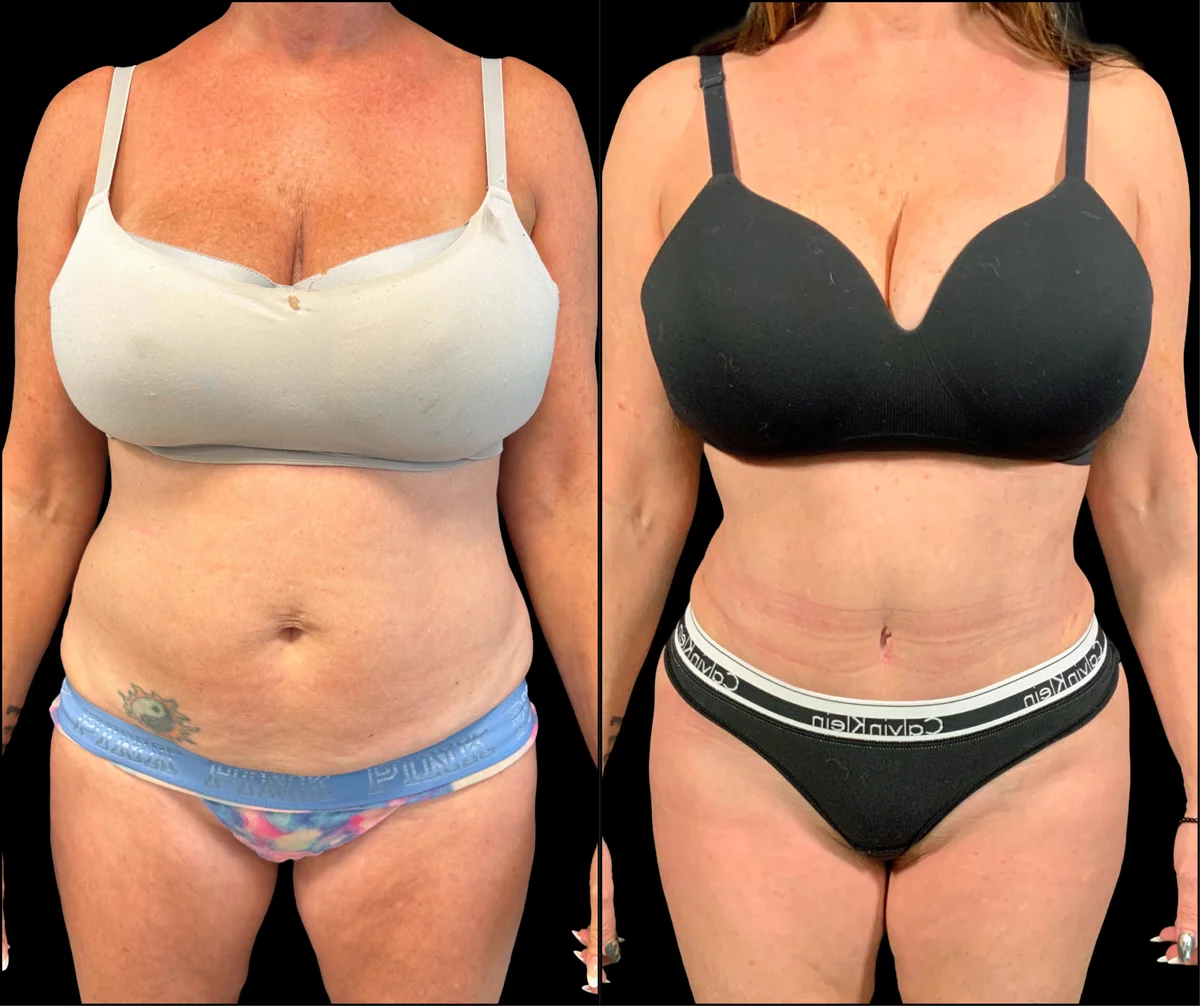
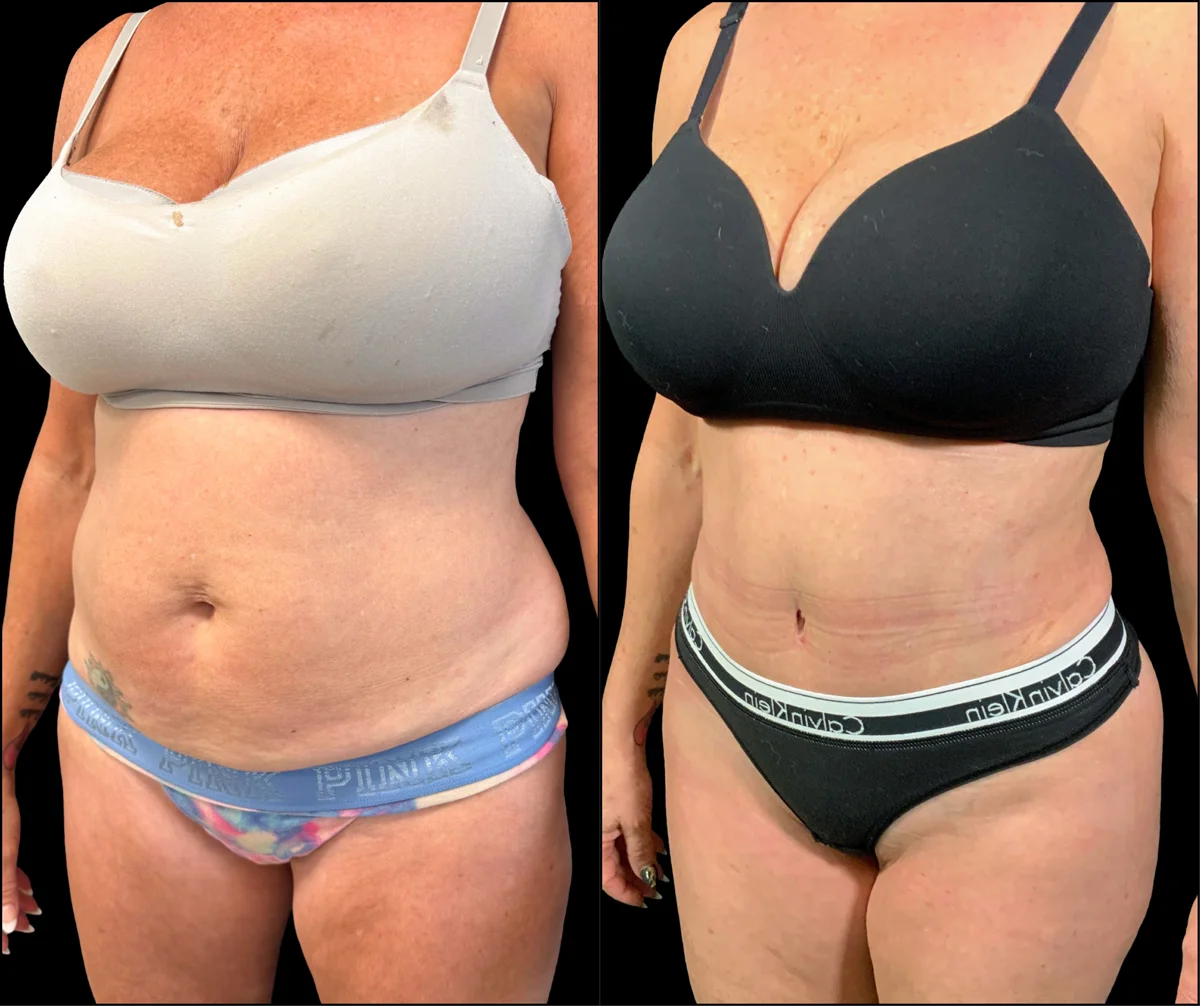
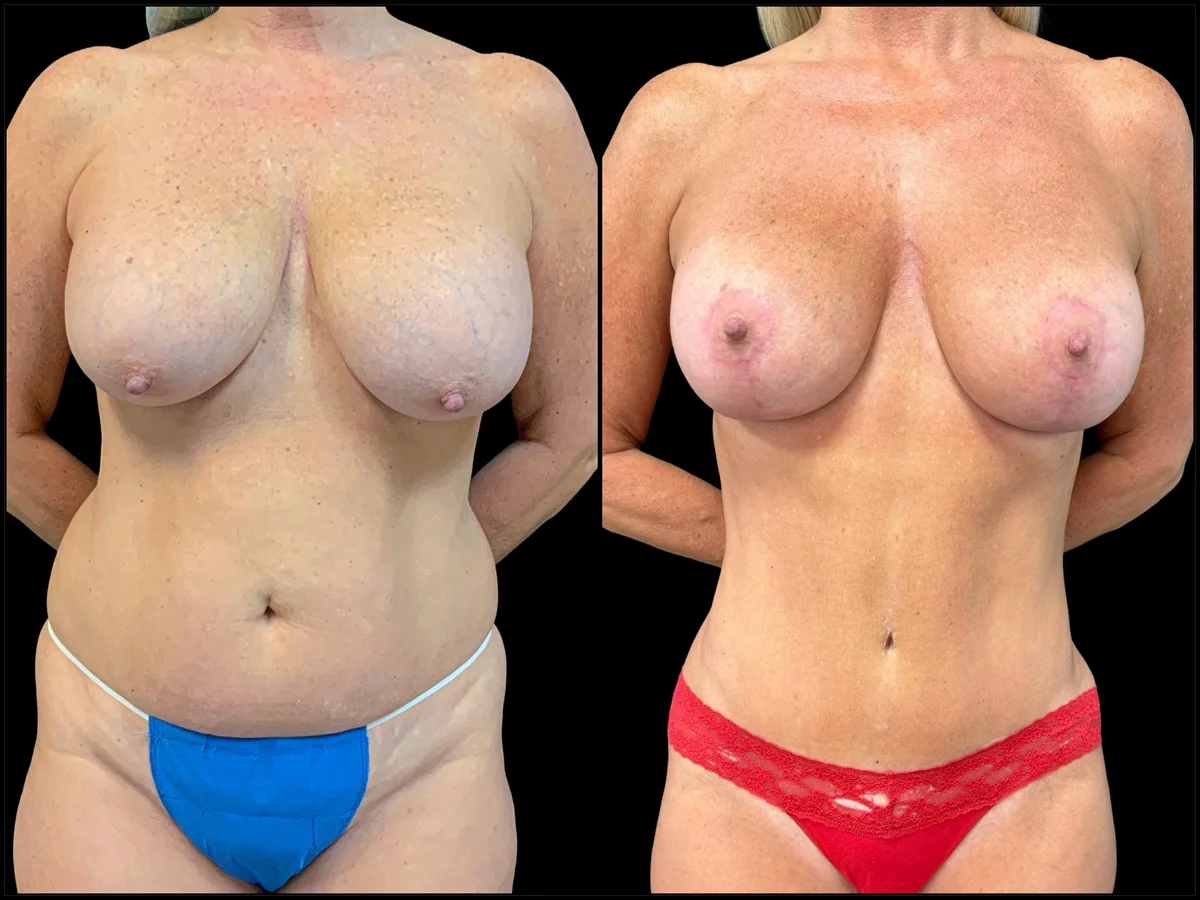
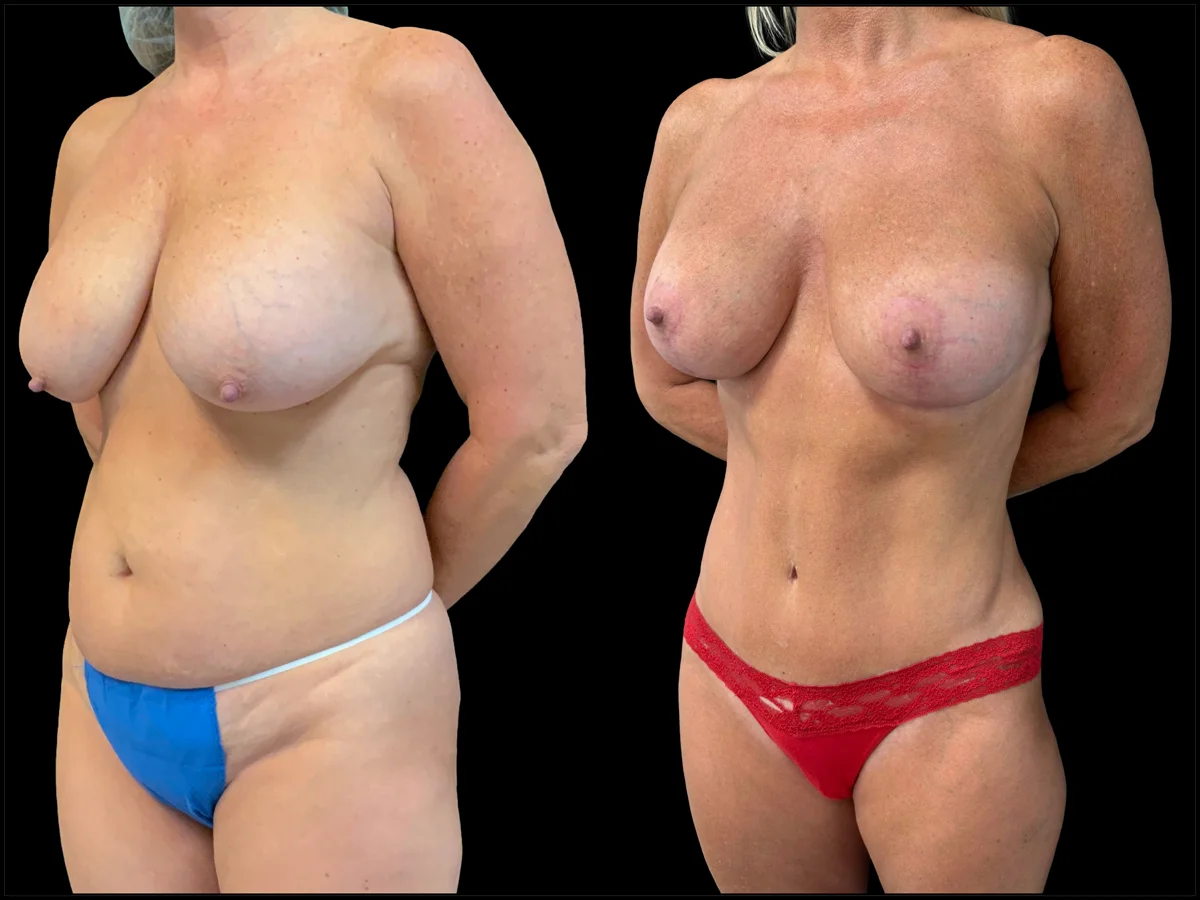
One of the biggest concerns patients have about a tummy tuck is the incision.
Almost every patient wants the shortest incision possible. I understand that completely. No one wants a longer scar than necessary. But the most important thing I explain during consultation is that incision length is not chosen randomly, and it should not be based on a generic idea of what a tummy tuck “should” look like.
The incision should be determined by the amount and location of excess skin.
That is what creates the best contour.
The most confusing term for patients is usually “mini tummy tuck.”
Many people hear “mini” and assume it means a very short scar. But that is not always true. A mini abdominoplasty refers more to the amount of dissection performed, not necessarily the length of the incision.
In a mini tummy tuck, the dissection is limited mainly to the area below the belly button. It can be a good operation for a very specific patient: someone with limited lower abdominal skin excess, good upper abdominal contour, minimal or no muscle separation above the belly button, and no major belly-button issue.
But “mini” does not automatically mean better. It also does not mean it can solve everything a full tummy tuck can solve.
If a patient has significant loose skin, diastasis recti, belly-button changes, or skin excess that extends toward the flanks, a mini tummy tuck may be too limited. In that situation, trying to force a smaller operation onto a bigger anatomical problem can create a compromised result.
During consultation, I evaluate both skin quality and skin excess.
Skin quality refers to how elastic the skin is. Stretch marks are often a giveaway that the collagen and elastic properties of the skin have changed. I also assess skin texture, how the skin redrapes, and whether some areas have better elasticity than others.
Skin excess is different. That is the actual amount of extra skin that needs to be removed or tightened.
One of the most useful ways to show this to patients is simple: I have them sit at the edge of the exam table, bent at about 90 degrees, and we look at where the lower abdominal skin folds.
That fold tells us a lot.
If the fold ends on the front of the abdomen, then an incision that extends from one end of that fold to the other may be enough. In many patients, that is essentially a hip-to-hip incision.
If the fold continues beyond the hip and toward the flank, then the skin excess is not just in the front. It extends laterally. In that case, an extended abdominoplasty may be the better option.
This exam helps patients see the issue for themselves. It turns an abstract discussion about scar length into a very practical discussion about anatomy.
A shorter scar sounds appealing, but it can be the wrong choice if it does not address all of the excess skin.
If the incision stops too soon, the skin at the ends may be left behind. Once the front of the abdomen is tightened, that remaining skin can bunch, protrude, or hang over the sides. This is commonly referred to as a dog-ear deformity.
That is why I am very direct with patients: the goal is not simply to make the shortest incision. The goal is to make the correct incision.
A scar that is slightly longer but placed low, hidden well, and designed to remove the full area of excess skin is often far better than a shorter scar that leaves behind contour problems.
The length of the incision should serve the result.
A mini tummy tuck is best for patients with limited skin excess below the belly button and good anatomy above it.
A standard tummy tuck is appropriate when the skin excess is mainly in the front of the abdomen and the patient needs a more complete correction, often including muscle repair and belly-button reshaping.
An extended tummy tuck is best when the skin excess continues beyond the front of the abdomen toward the hips or flanks. In those cases, extending the incision allows for better contour along the sides and helps prevent leftover skin at the ends.
Each version has a role. None is automatically better. The best version is the one that matches the patient’s anatomy and goals.
The belly button is another important part of the decision-making process.
After pregnancy or weight changes, the belly button may become stretched, widened, hidden, or pulled downward by loose skin. Some patients also have previous belly-button piercings, scarring, prior surgery, or a small umbilical hernia.
When those issues are present, I need a plan for the belly button. A tummy tuck allows the belly button to be better positioned, contoured, and aesthetically improved.
Liposuction alone cannot do that. A mini tummy tuck may not fully address it either, depending on the anatomy.
That is why the belly button is not a small detail. It is central to how natural the abdomen looks after surgery.
Once the correct tummy tuck design is chosen, liposuction can be used to refine the overall shape.
This is where my aesthetic philosophy comes in. I do not think of a tummy tuck as simply making the abdomen flat. A flat abdomen alone can still look boxy if the surrounding waist and flank areas are not addressed.
My goal is to restore a more feminine silhouette. I want the waist-to-hip transition to look natural. I want the contour to flow from the upper body to the lower body. I want the result to look balanced, not just tight.
That is why liposuction is often valuable during a tummy tuck. It helps contour the flanks and surrounding areas while the tummy tuck addresses the skin and muscle.
Patients are often worried about the scar, and understandably so.
My goal is always to place the incision as low as possible so it is easily hidden in clothing and swimwear. Whether the incision is less than hip-to-hip, hip-to-hip, or extended toward the flanks, placement matters tremendously.
A well-planned tummy tuck scar should be purposeful. It should remove the correct amount of skin, avoid leaving excess behind, and be placed in a location that works with the patient’s clothing and body shape.
For patients who already have a C-section scar, there is often an added advantage: the old scar can usually be removed and replaced with a lower, more aesthetically planned tummy tuck scar.
The question is not, “Can I have the smallest tummy tuck?”
The better question is, “What operation will remove the skin that actually needs to be removed and create the best contour?”
A mini, standard, or extended tummy tuck should be chosen based on anatomy. The incision should match the skin excess. If the fold of loose skin extends toward the flanks, the incision may need to extend as well. If the problem is limited, a smaller operation may be appropriate.
The goal is always the same: remove the right amount of skin, repair what needs to be repaired, place the scar low, and create a smooth, feminine, natural contour.
That is what makes the result predictable. Not the shortest scar possible, but the best-planned scar for the anatomy.