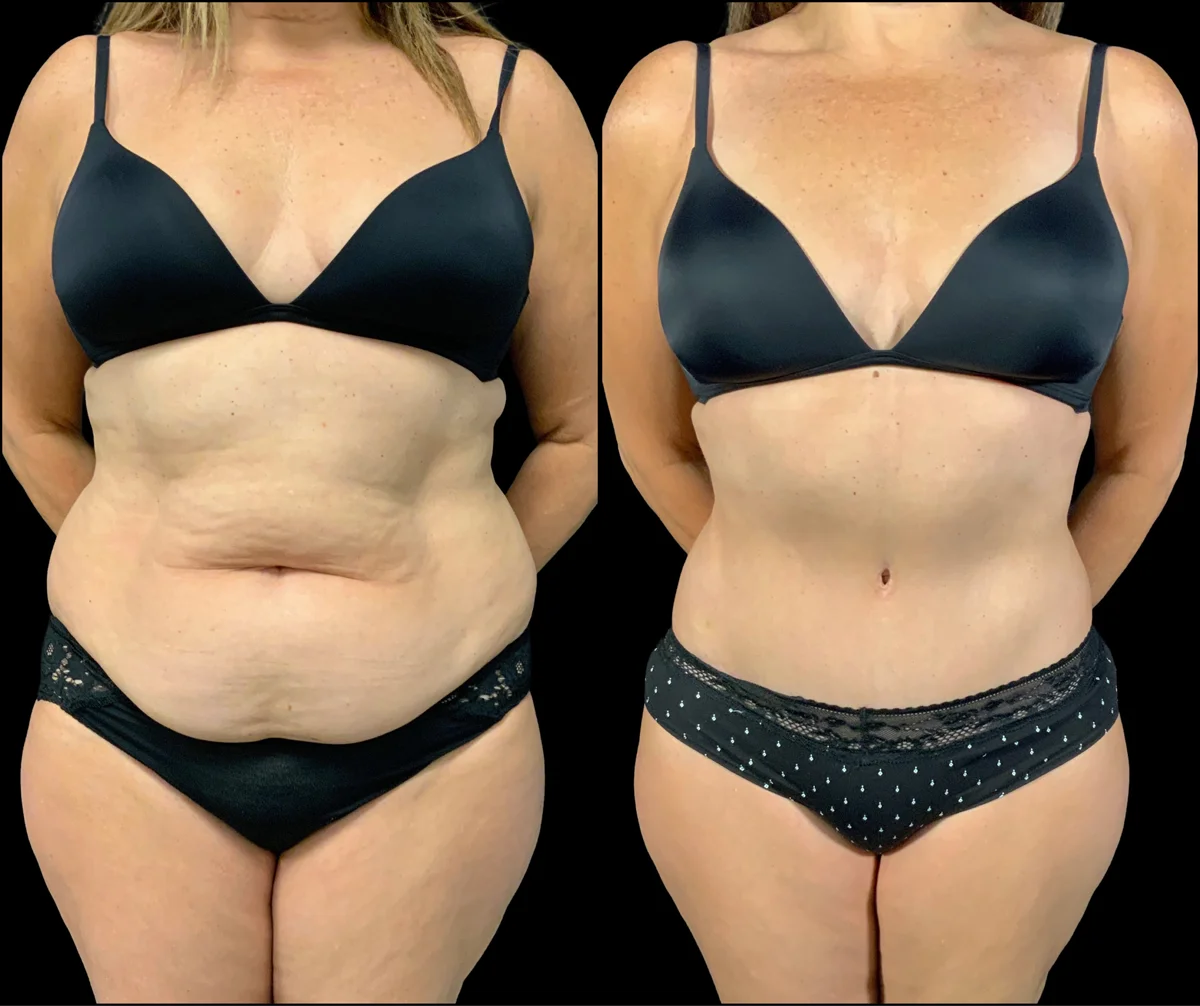
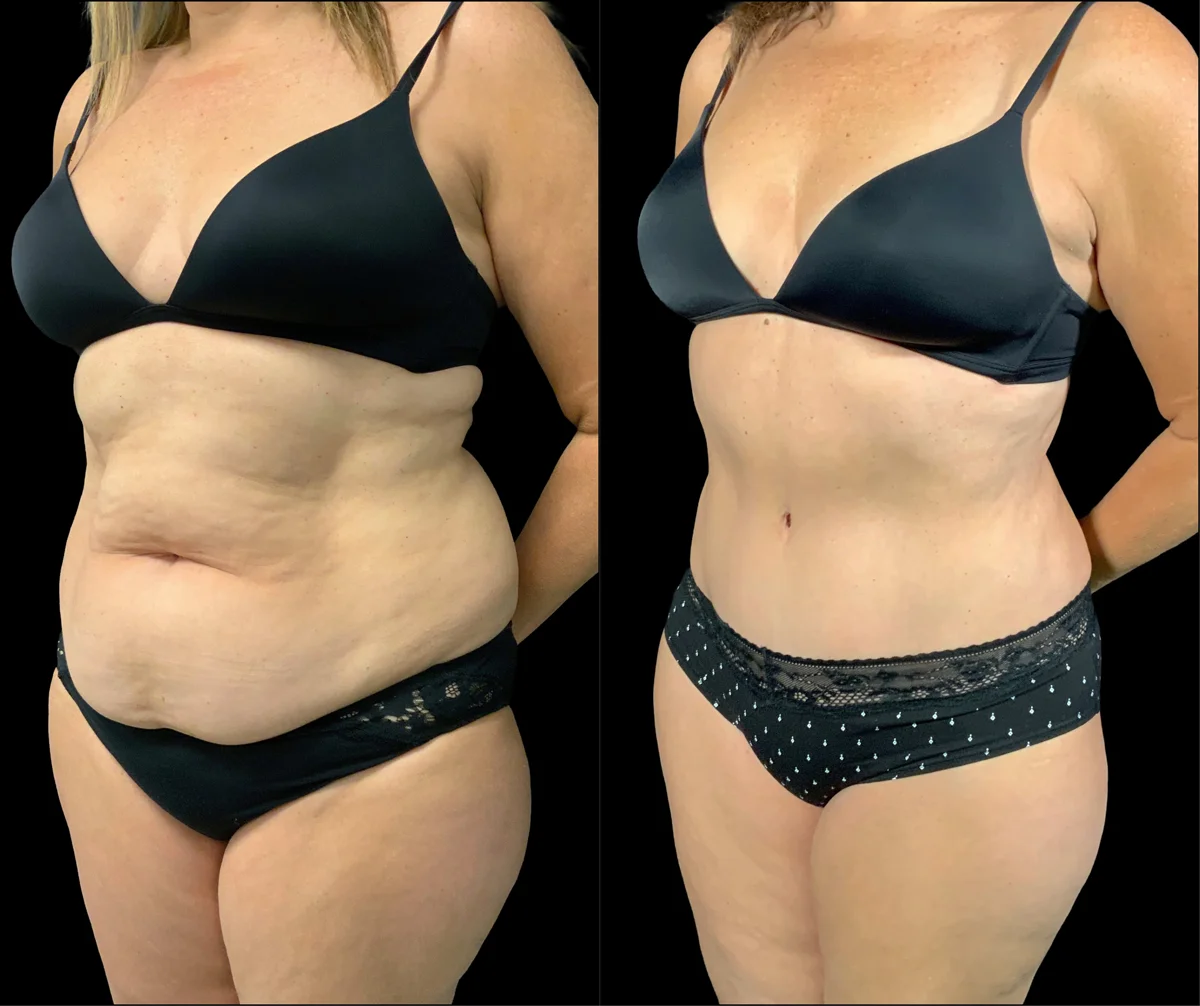
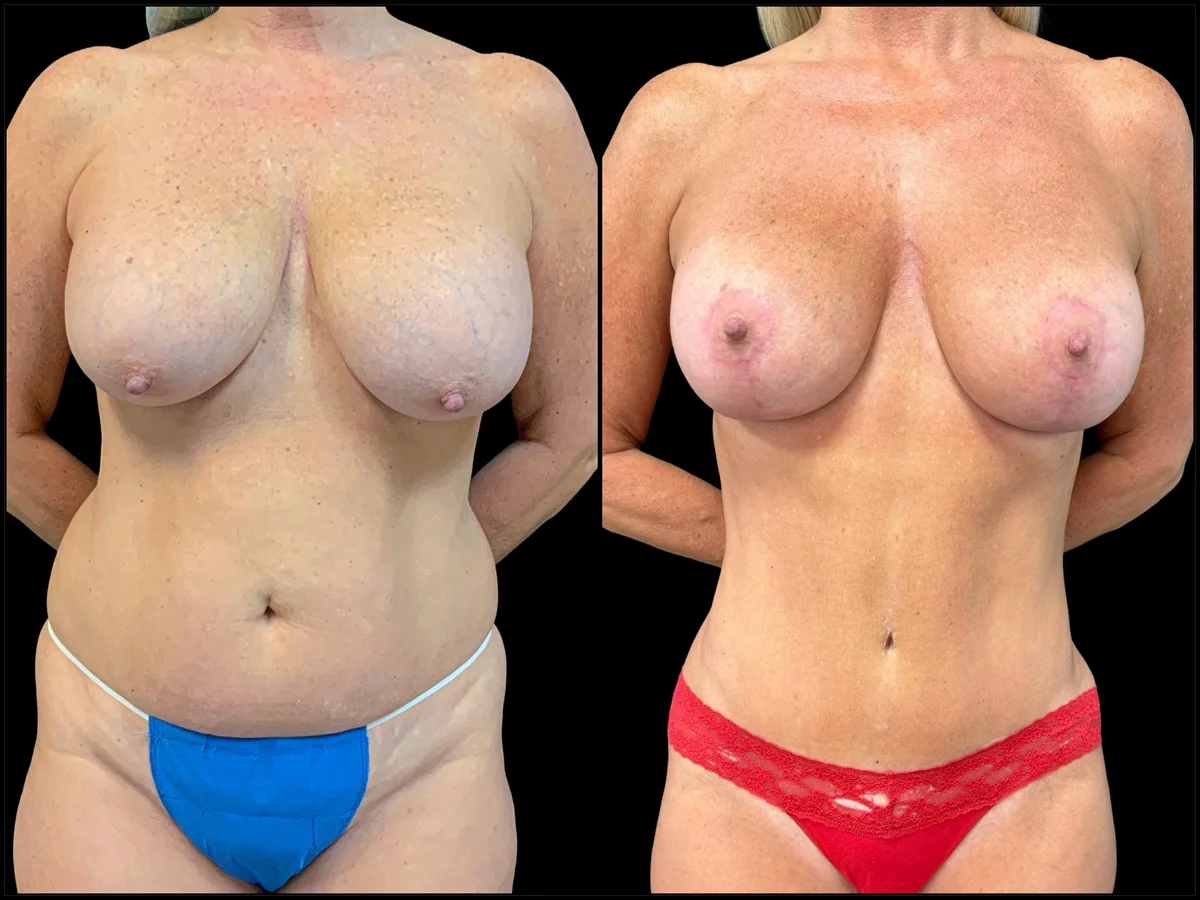
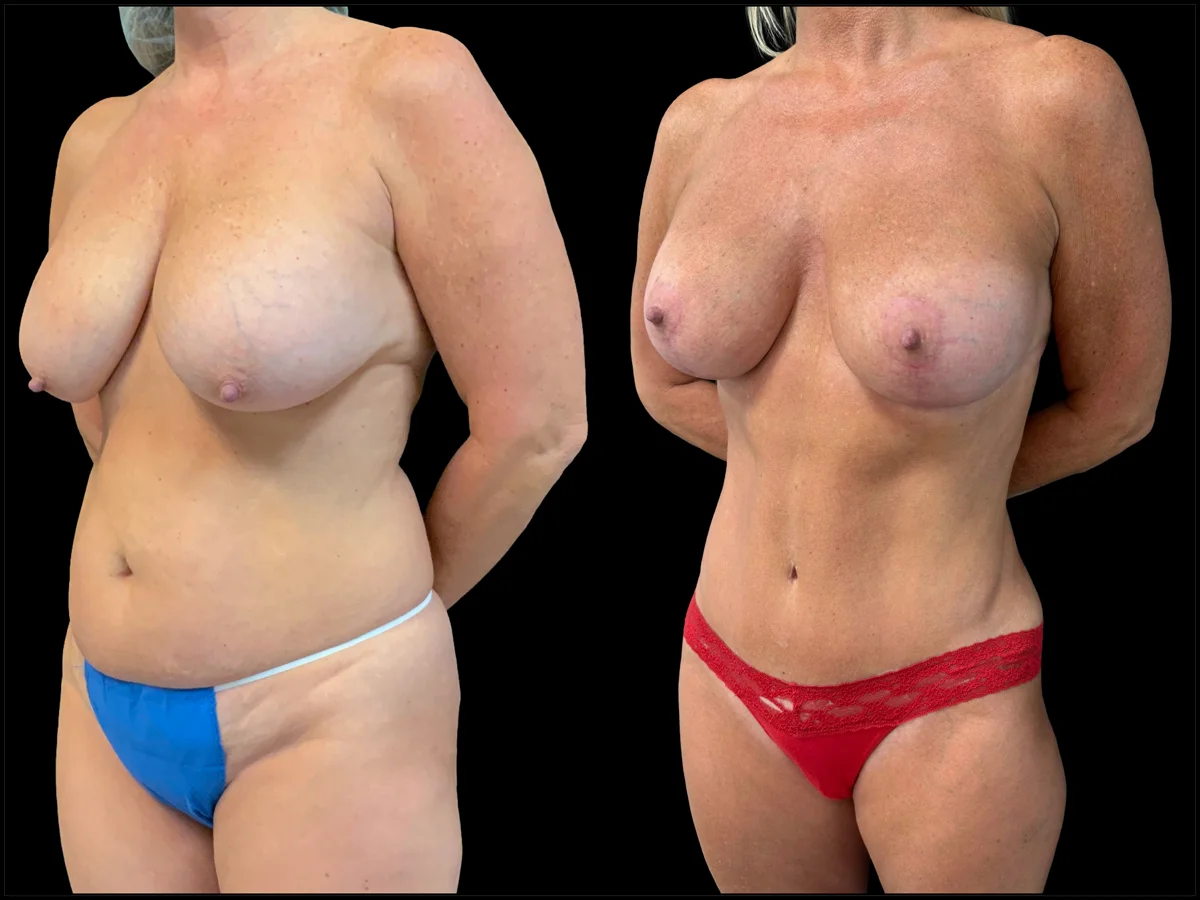
Many patients come into consultation believing their abdomen is still full or round because of fat.
Sometimes that is true. But very often, especially after pregnancy, the issue is not just fat. It is muscle separation.
This is one of the most important distinctions between liposuction and tummy tuck surgery. Liposuction removes fat. It does not repair the abdominal wall. If the abdomen protrudes because the muscles have separated, liposuction alone will not make the abdomen truly flat.
That is why I spend a lot of time explaining diastasis recti to patients.
The analogy I use almost daily is a balloon.
If you blow up a balloon and leave it stretched, then let the air out, the balloon does not return perfectly to its original size or tightness. The material has been stretched. It may still have shape, but it is not the same as it was before.
Pregnancy does something similar to the abdomen.
For nine months, the abdominal wall stretches to accommodate the growing uterus and baby. The skin stretches, the soft tissue stretches, and the abdominal wall has to expand. The weakest point of the front of the abdomen is the midline, where the abdominal structures meet. That is why umbilical hernias are also common in this area.
As the abdomen expands, pressure is placed on that midline. The rectus muscles — the vertical “six-pack” muscles — can gradually separate from one another. They do not usually tear. Instead, they spread apart, almost like curtains being pulled away from the center.
That separation is called diastasis recti.
A patient with diastasis may be fit. She may have lost the baby weight. She may work out consistently. She may even see muscle definition in the upper abdomen.
But she may still feel that the abdomen is loose, rounded, or pushed forward.
That is because the issue is not necessarily fat. It is the structure of the abdominal wall.
If the abdominal muscles are separated, the abdomen may protrude even when the patient is thin. The core may feel weaker. The lower abdomen may look fuller. The patient may describe feeling “loose” or say, “No matter how much I exercise, I cannot get my stomach flat again.”
In those cases, liposuction is not the answer by itself. Liposuction can remove fat sitting above the muscle, but it cannot bring the muscles back together.
In many patients, the separation can be felt during an exam.
When the patient engages the abdomen, such as with a crunch-type movement, the edges of the rectus muscles can sometimes be felt along the midline. The gap may be one, two, three, or even four fingerbreadths wide, depending on the degree of separation.
It is important to understand that diastasis recti is not the same as a hernia. With a hernia, something is protruding through a defect. With diastasis, the abdominal wall is widened and weakened, but there is not necessarily a true hole.
Still, the effect can be very real. The abdominal wall is no longer functioning as one tight, unified layer. The muscles are splayed apart, with a thinner layer in the middle. That is why the abdomen can look and feel different after pregnancy.
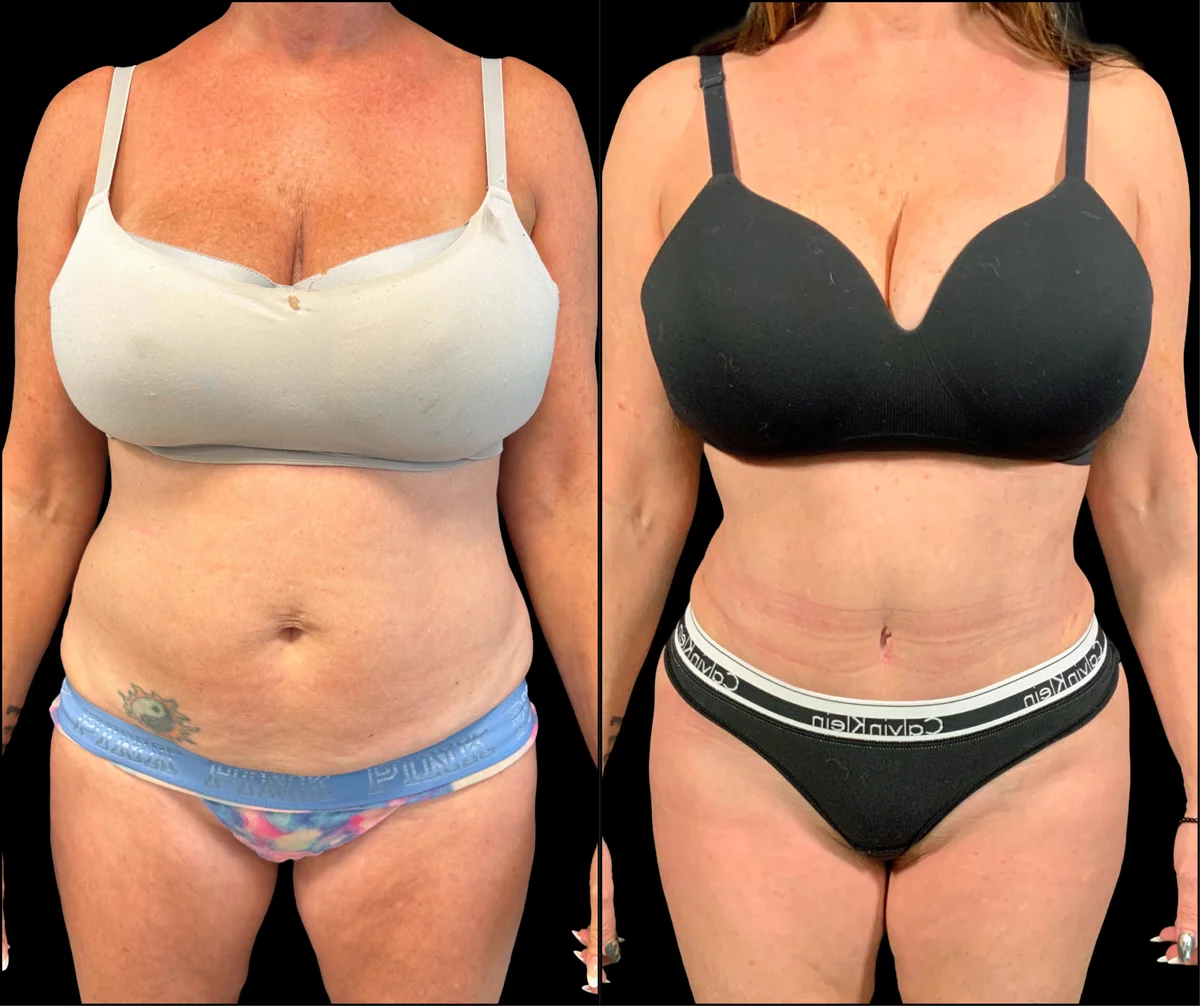
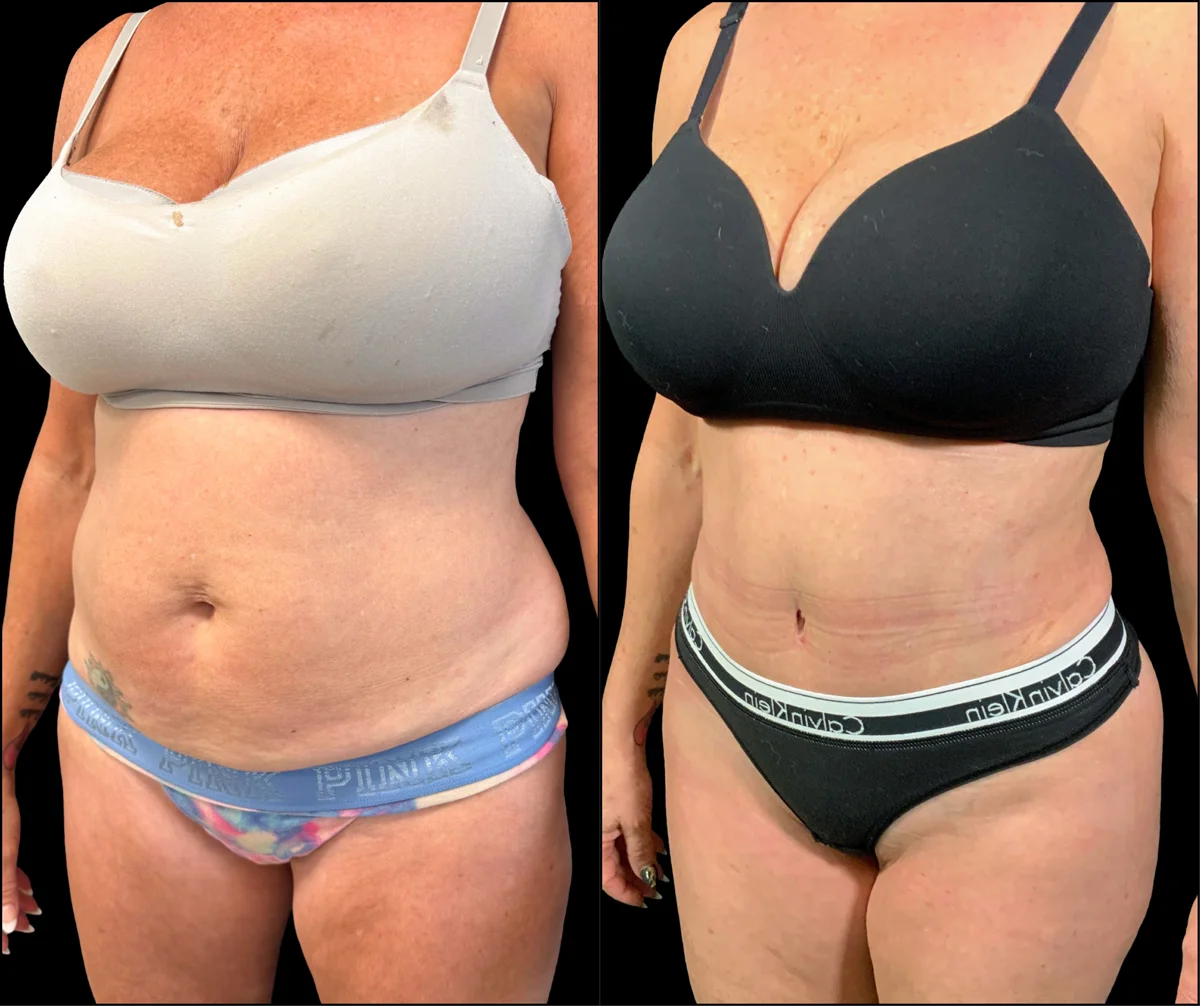
One patient scenario I often think about is a mother in her 40s who had done everything right after her last pregnancy.
She lost the weight. She exercised. She improved her overall muscle tone. Her upper abdomen even showed some definition. But she still felt that her abdomen would not become flat. She had a small amount of lower abdominal fullness and some contour concerns in the flanks, but the main issue was that the abdomen still projected forward.
On exam, the reason became clear: she had diastasis from three pregnancies.
Even though she had improved her core strength, the abdominal wall itself was still separated. Liposuction could have refined the lower abdomen and flanks, but it would not have corrected the main structural issue. It would not have made the abdomen flatter in the way she wanted.
For her, the anatomical problem required an anatomical fix. That meant a tummy tuck with diastasis repair, combined with liposuction for contouring.
That distinction is critical. If she had undergone liposuction alone, she likely would have been disappointed. The fat would have been reduced, but the abdomen would still have projected because the muscles were still separated.
During a tummy tuck, the abdominal wall can be tightened. The separated muscles can be brought back toward the midline, restoring a flatter and firmer foundation.
This is one of the biggest advantages of a tummy tuck over liposuction alone.
The tummy tuck is not just a skin operation. It is not just a fat-removal operation. In the right patient, it is a structural operation. It addresses the deeper layer that liposuction cannot reach.
Once the muscle separation is repaired, the excess skin can be removed and the skin can be redraped over a flatter foundation. Liposuction can then be used to contour the waist and flanks, improving the surrounding shape.
That combination can create a much more complete result than liposuction alone in a patient with diastasis.
This can be frustrating for patients because they may feel they have “failed” to fix the problem with exercise.
I try to reassure them that this is not a failure of effort. It is anatomy.
Exercise can improve strength, tone, posture, and function. It can make a tremendous difference in the way the abdomen feels and performs. But if the rectus muscles remain separated, exercise alone may not fully restore the pre-pregnancy abdominal contour.
In some cases, the stronger the patient becomes, the more obvious the difference is. She may see muscle definition but still have central protrusion. That is often a clue that the issue is structural rather than simply a lack of fitness.
Liposuction still has an important role.
When I combine liposuction with a tummy tuck, I use it as a contouring tool. The muscle repair can help flatten the abdomen. The skin removal can tighten the front. Liposuction can then shape the surrounding areas — especially the waist, flanks, and lower abdomen — so the final result is more feminine and balanced.
Without liposuction, the abdomen may be flatter but the waist may remain boxy. My goal is not only to flatten the abdomen. My goal is to restore a natural feminine silhouette, with a smoother transition from the upper body to the waist, hips, and lower body.
That is why I often think of liposuction as an adjunct during a tummy tuck. It helps refine the final shape, but it does not replace the muscle repair when muscle separation is the real problem.
If the abdomen protrudes because of fat, liposuction may be an excellent option.
If the abdomen protrudes because of muscle separation, liposuction alone will not solve the problem.
This is the key difference patients need to understand. Liposuction contours fat. A tummy tuck can address skin, fat, and the abdominal wall. For many women after pregnancy, especially those with diastasis recti, that deeper repair is what makes the result more definitive.
Both procedures have a place. The goal is to match the procedure to the anatomy. When the anatomy includes muscle separation, a tummy tuck is often the operation that can accomplish what liposuction simply cannot.